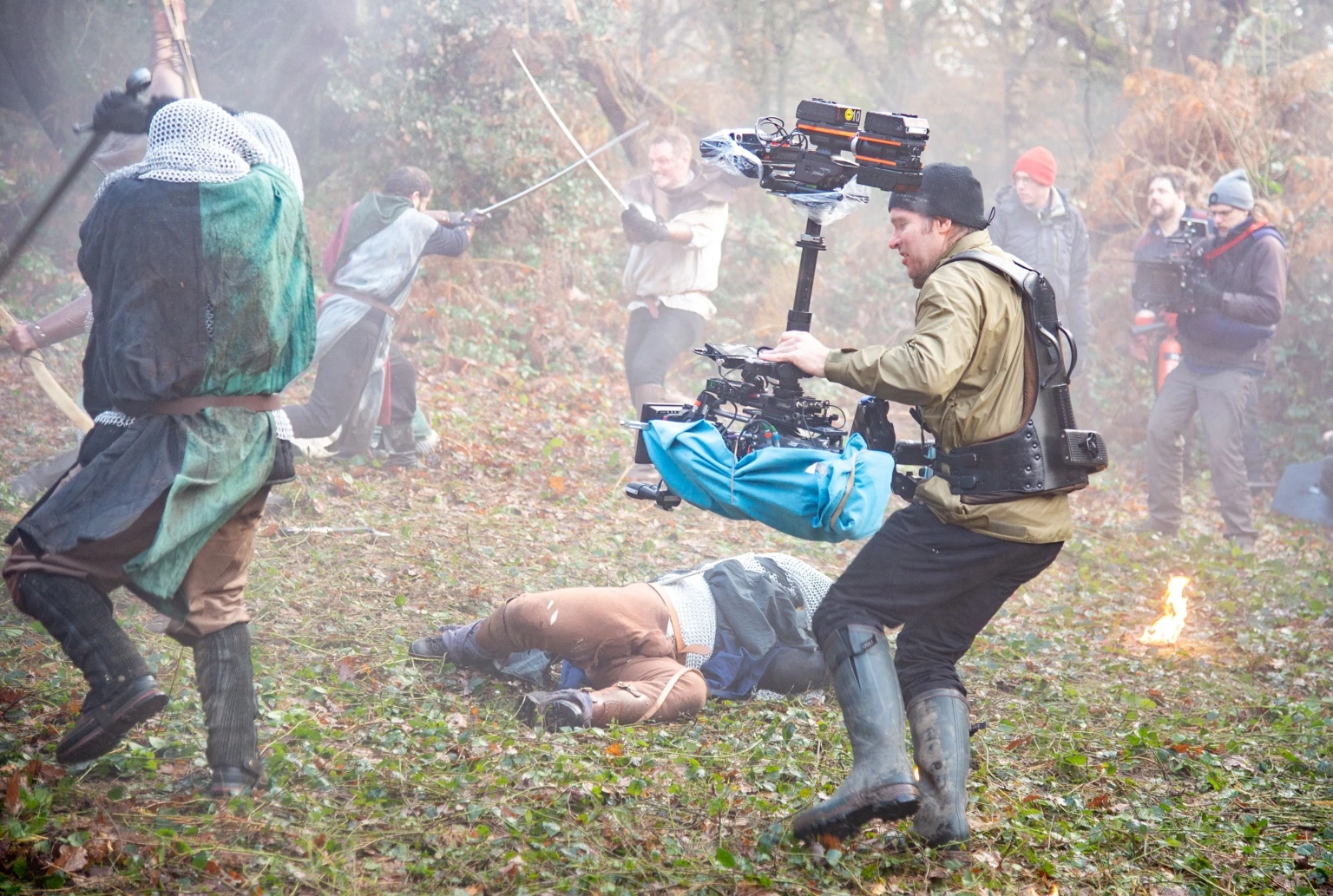
Storyboards and previsualisation are most valuable when they resolve a particular question. A production may need to explain a reveal, understand the geography of a sequence or agree how several departments will contribute. Different questions need different levels of detail.
Preparing more material is not automatically better preparation. The right approach gives the team enough shared understanding to make decisions without turning every provisional idea into an apparent commitment.
Use storyboards to clarify the visual argument
Boards can communicate framing, order and the relationship between important moments. They are useful when the way information is revealed matters, or when a sequence is difficult to explain through script description alone.
Label their purpose. A board exploring the scene’s rhythm is different from a final coverage plan. Cast, location and camera decisions may still change it. The team needs to know which parts express intention and which represent an agreed practical approach.
Use previs when timing and relationships need testing
Previs can help a director and specialist departments examine how a sequence fits together over time. It can expose unclear geography, missing transitions or conflicting expectations before the shoot.
The format should suit the problem. A simple filmed rehearsal, an edited reference or a more developed visualisation may each be appropriate in different circumstances. Specialist method and production suitability should be discussed with the responsible team.
Make review and version control part of the work
Decide who reviews the material and what approval means. A creative sign-off does not replace specialist assessment, and a convincing visualisation does not by itself establish that a sequence is ready to shoot.
Keep versions dated and connect changes with the script and production plan. When an approved sequence changes, the affected departments need to know what changed, why and which decisions must be revisited.
Planning questions answered
Does every film need previs?
No. Use it where the benefit is clear. A scene may be better served by rehearsal, a location discussion or a focused shot plan. The question is what uncertainty the production needs to remove.
Can previs help estimate a sequence?
It can make the intended scope easier to discuss, but estimates still depend on the real location, performers and technical requirements. Treat it as supporting information rather than a complete specification.
Should actors reproduce the previs exactly?
Agree which elements are fixed and where performance can develop. A preparation tool should support the scene while respecting any specialist constraints established by the production.
Prepare for the decision ahead
My stunt coordination and action design work sits alongside narrative directing. Discuss a sequence or production brief to establish which preparation would be most useful.